
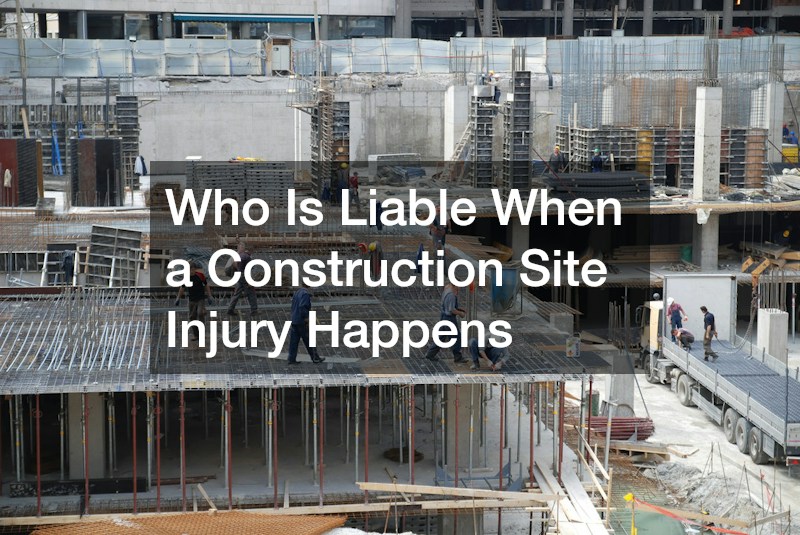
A construction site injury can turn your life upside down in seconds, leaving you with medical bills, lost wages, and a confusing tangle of legal questions. Unlike a simple slip and fall, construction accidents often involve multiple parties, overlapping insurance policies, and strict safety regulations that most people have never had to think about. Understanding who is actually responsible for your injury is the first step toward getting fair compensation and moving forward with your recovery. This guide breaks down the key players, the evidence that matters, and the steps you should take right after an accident.

Identifying the Parties Who Could Be Responsible
Construction sites are rarely run by a single company, which means liability for an injury can be spread across several different entities. The general contractor, subcontractors, property owner, equipment manufacturer, and even an architect or engineer could all share some portion of fault depending on what caused the accident. Figuring out which party or parties are legally responsible requires a close look at contracts, job site roles, and safety protocols that were in place at the time.
In many cases, more than one party contributed to the conditions that led to the injury. A subcontractor might have installed faulty scaffolding, while the general contractor failed to inspect it before workers used it. These layered responsibilities are exactly why these cases often take longer to resolve than a typical workplace injury claim.
- General contractors overseeing daily site operations and safety compliance
- Subcontractors responsible for specific trades like electrical or structural work
- Property owners who control site access and conditions
- Equipment manufacturers if faulty machinery caused the injury
- Architects or engineers whose design flaws contributed to the hazard
Common Causes of Construction Site Accidents
Most construction injuries trace back to a handful of recurring hazards that safety regulations are specifically designed to prevent. Falls from scaffolding, ladders, or unprotected roof edges remain one of the leading causes of serious injury on job sites. Electrocution, being struck by falling objects, and getting caught in or between heavy machinery round out what safety experts often call the “fatal four.”
Beyond these major categories, poor site maintenance and inadequate training contribute to a large share of incidents. A cluttered walkway, missing guardrails, or an untrained worker operating a crane can all set the stage for a preventable injury. Documenting exactly what went wrong at the scene makes it much easier to establish a clear chain of responsibility later.
- Falls from heights due to missing or faulty fall protection
- Electrical hazards from exposed wiring or improper grounding
- Falling tools, debris, or materials from upper levels
- Equipment malfunctions or improperly maintained machinery
- Trench collapses and inadequate shoring

Workers Compensation Versus a Third Party Injury Claim
If you were injured while working on a construction site, your first source of compensation is usually workers compensation insurance, regardless of who was at fault. This system provides medical coverage and partial wage replacement but typically does not allow you to sue your direct employer for additional damages like pain and suffering. However, if a party other than your employer contributed to your injury, you may be able to file a separate third party claim against them.
This distinction matters a great deal because a third party claim can recover compensation that workers compensation simply does not cover. For example, if a subcontractor’s negligence caused your fall, you could pursue a claim against that subcontractor even while receiving workers compensation benefits. Sorting out which path applies to your situation often requires reviewing your employment status, the site’s contractual relationships, and state-specific labor laws.
- Workers compensation covers medical bills and partial lost wages
- It generally does not cover pain, suffering, or emotional distress
- Third party claims can target negligent contractors, manufacturers, or property owners
- You can sometimes pursue both workers compensation and a third party claim simultaneously
Evidence That Strengthens a Liability Claim
Strong evidence is what separates a claim that gets dismissed from one that results in fair compensation. Photographs of the accident scene, including any visible hazards or missing safety equipment, should be taken as soon as possible after the injury occurs. Witness statements from coworkers who saw what happened can also carry significant weight, especially if they corroborate safety violations that were already known to site management.
Official records matter just as much as scene evidence. Incident reports filed with the site supervisor, OSHA citations issued against the contractor, and maintenance logs for equipment involved in the accident can all help establish a pattern of negligence. Keeping copies of every medical record, pay stub, and piece of correspondence related to the injury also protects you if questions arise later about the timeline of your treatment and recovery.
- Photos and videos of the hazard and surrounding area
- Written witness statements collected close to the time of the incident
- OSHA inspection reports or safety violation citations
- Equipment maintenance and inspection logs
- Complete medical records documenting the injury and treatment
Protecting Sensitive Paperwork During a Legal Claim
Construction injury cases generate a surprising amount of paperwork, from medical bills and insurance correspondence to employment records and settlement offers. Once your case is resolved, holding onto sensitive documents longer than necessary can actually expose you to identity theft or fraud. Many people choose secure document shredding services once their attorney confirms the case files are no longer needed, since these documents often contain Social Security numbers, medical histories, and financial details.
It is worth asking your legal team how long you should retain physical copies before disposing of them responsibly. Scanning important records for digital backup before shredding the originals gives you peace of mind without cluttering your home with boxes of outdated paperwork. This step is often overlooked, but it is a simple way to close out a stressful chapter without leaving loose ends.

Why Experienced Legal Representation Makes a Difference
Construction liability cases are notoriously complex because they often involve multiple insurance companies—representing the general contractor, subcontractors, equipment manufacturers, and property owners—all trying to minimize their own payout. Each carrier may attempt to shift blame onto another party, delay claims processing, or offer a quick lowball settlement before the full extent of injuries is known.
Having knowledgeable personal injury lawyers on your side levels the playing field, since they understand how to investigate multi-party fault, gather evidence like safety inspection records and witness statements, and negotiate with aggressive insurance adjusters who deal with these cases every day. An experienced attorney also knows how to calculate the true value of your claim, including future medical costs, ongoing rehabilitation, and lost earning potential that many injured workers underestimate.
For example, a worker with a serious back injury might assume their claim only covers current hospital bills, overlooking the cost of years of physical therapy or a permanent reduction in their ability to perform physical labor. Attorneys often consult medical experts and economists to project these long-term damages accurately.
Beyond the numbers, a skilled lawyer understands the procedural deadlines and filing requirements that can make or break a case, such as statutes of limitations or third-party claim rules that vary by state. Missing a deadline or filing the wrong type of claim can eliminate your right to compensation entirely, regardless of how strong the underlying case may be. Having that legal guidance from the outset helps ensure injured workers pursue every avenue of recovery available to them, rather than settling for less than they deserve.
Not every law firm has the resources to handle a case involving multiple contractors, insurance companies, and complicated safety regulations. Construction injury claims often require accident reconstruction experts, OSHA compliance knowledge, and the ability to go up against well-funded defense teams, which can stretch a small practice thin. When researching your options, it helps to look specifically for the best accident attorneys who have a track record with construction-related injuries rather than general practice firms that dabble in personal injury cases occasionally.
Ask potential attorneys how many similar cases they’ve handled, what percentage settled versus went to trial, and whether they’ve worked with cases involving multiple liable parties like you might face. Firms with dedicated construction accident experience are more likely to know which subcontractors, equipment manufacturers, or property owners could share liability, and how to build evidence accordingly.
A free initial consultation is usually available, giving you a chance to ask questions and understand your legal options before committing to representation. Use this meeting to discuss fee structures, typical case timelines, and how often you can expect updates, since these details often reveal how much personal attention your case will actually receive.
- Look for attorneys with specific construction injury case experience, not just general personal injury work
- Ask how many construction site cases they’ve handled involving scaffolding falls, equipment accidents, or OSHA violations
- Ask about their track record with multi-party liability claims, since these cases often involve contractors, subcontractors, and equipment manufacturers
- Confirm whether consultations are free and what fees apply if you win, typically a contingency fee between 25% and 40%
- Clarify who covers costs like expert witnesses and medical record requests if the case doesn’t succeed
- Request references or case results from similar claims, including settlement amounts and trial outcomes
- Ask whether the attorney has experience negotiating with workers’ compensation insurers alongside third-party claims
How Construction Claims Differ From Other Personal Injury Cases
While the general principles of negligence apply across most injury cases, construction accidents involve a unique mix of regulatory codes, labor laws, and contractual agreements that do not come up in other claims. A car accident lawyer handling a routine collision typically deals with police reports and traffic laws, while a construction case requires deep familiarity with OSHA standards and site safety protocols. This specialized knowledge is one reason injured workers benefit from attorneys who focus specifically on workplace and construction incidents.
Timelines also differ significantly between case types. Construction injury claims often take longer to resolve because investigators must determine fault among several companies, whereas a straightforward car accident claim might settle in a matter of months. Patience and thorough documentation throughout the process ultimately lead to a stronger outcome, even if it takes longer to reach a resolution.
Steps to Take Immediately After a Job Site Injury
What you do in the hours and days following a construction injury can significantly affect the outcome of your claim. Reporting the incident to your supervisor right away creates an official record that cannot easily be disputed later. Seeking medical attention immediately, even for injuries that seem minor at first, also ensures your condition is properly documented from the start.
Consulting with personal injury attorneys early in the process helps you avoid common mistakes, such as giving a recorded statement to an insurance adjuster without understanding your rights. Acting quickly also preserves evidence before it can be altered, removed, or lost, which is especially important on active job sites where conditions change daily.
- Report the injury to a supervisor immediately and request a written incident report
- Seek medical care even if symptoms seem minor at first
- Avoid giving recorded statements to insurance companies without legal guidance
- Keep a personal journal tracking pain levels, missed work, and recovery progress
- Consult an attorney before signing any settlement documents
Determining liability after a construction site injury is rarely simple, but understanding the key players, evidence, and legal pathways puts you in a much stronger position to pursue fair compensation. Taking the right steps immediately after the accident, from documenting the scene to seeking prompt medical care, can make a significant difference in how your claim unfolds. If you are still unsure who bears responsibility for your injury, speaking with a qualified attorney is the most reliable way to get clear answers tailored to your situation. Your health and financial recovery deserve that level of attention and care.
